Can Beginners Learn Russian Manicure First?
Russian manicure can be learned by beginners, but it should be approached as a technical skill - not just a beauty trend. The method requires controlled e-file movement, careful cuticle preparation, clean product placement, and a strong understanding of sanitation and nail anatomy.
For new nail students, the biggest challenge is not memorizing the steps. It is learning how much pressure to use, how to position the hand, how to recognize safe working areas, and how to avoid building habits that are difficult to correct later.
This guide explains what beginners should understand before learning Russian manicure, including e-file control, or any other nail training courses.
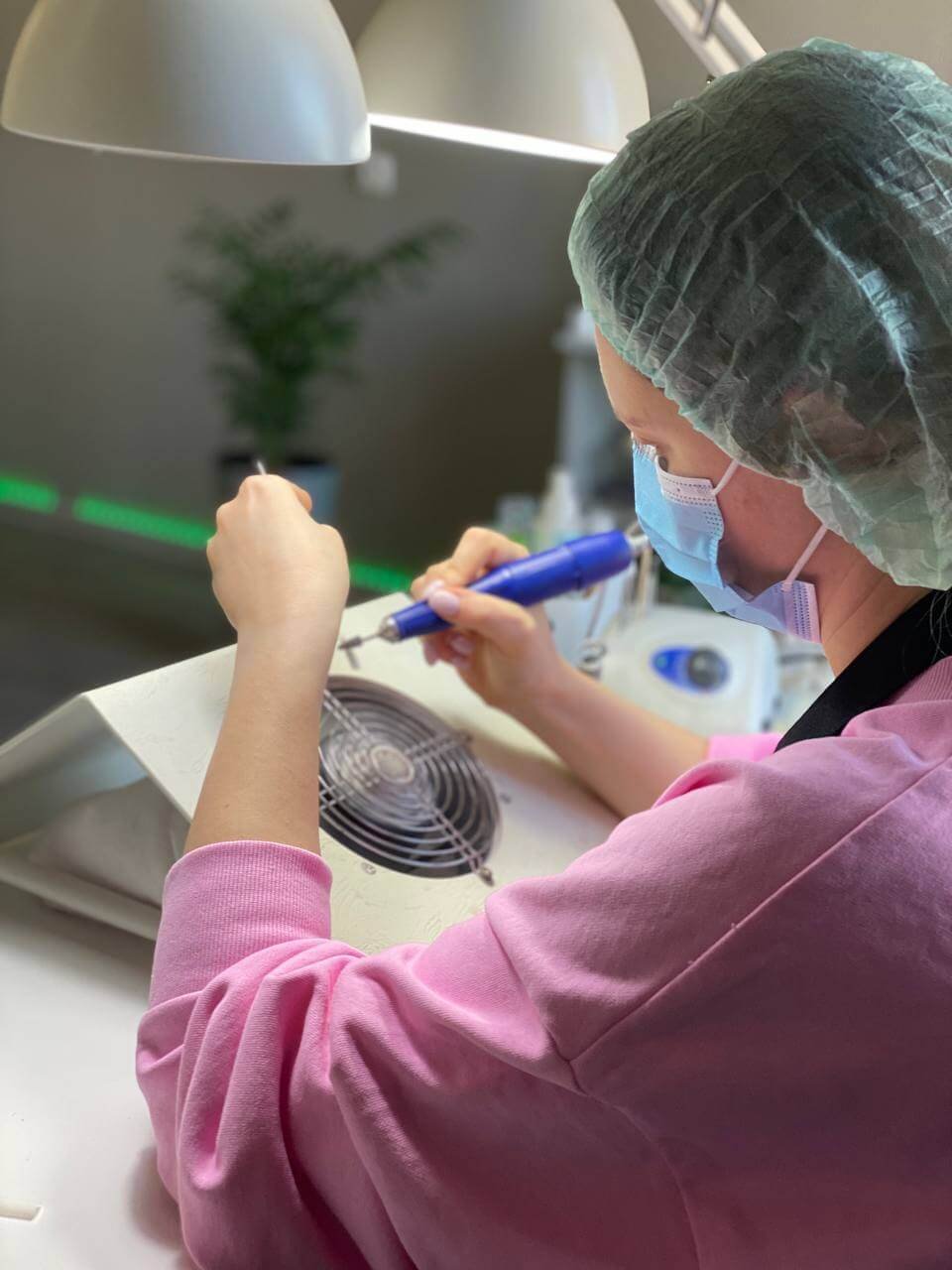
Gel removal practice during nail training
What Makes Russian Manicure Different for Beginners
Russian manicure is often described as a dry or e-file manicure because it does not rely on water soaking before cuticle work. Instead, the technique uses professional e-file bits and detailed preparation around the cuticle area.
For beginners, this changes the learning process. A basic manicure may focus on shaping, soaking, trimming, and polishing. Russian manicure requires more precision from the start.
Students need to understand:
how to hold and stabilize the client’s hand
how to control e-file speed and pressure
how to work around the cuticle area without over-filing
how to identify living and non-living tissue
how to prepare the nail plate for clean product application
how sanitation and sterilization fit into the full workflow
The goal is not to rush into advanced results. The goal is to build clean, safe, repeatable technique from the beginning.
Why Hands-On Correction Matters for New Students
Russian manicure is difficult to learn from theory alone. A student may understand the steps, but still use the wrong angle, apply too much pressure, or miss important visual cues on the nail and surrounding skin.
That is why direct correction is important.
An instructor can see details that a beginner may not notice yet, including:
whether the e-file is positioned correctly
whether the student is pressing too hard
whether the hand position is stable
whether the bit choice matches the task
whether the student is removing too much or too little
whether the final preparation is clean enough for product application
For beginners, this feedback helps prevent unsafe habits before they become automatic.
At Mars Nails School, training is held in person in Manhattan, with small groups and real practice under instructor supervision. The focus is on building control step by step.
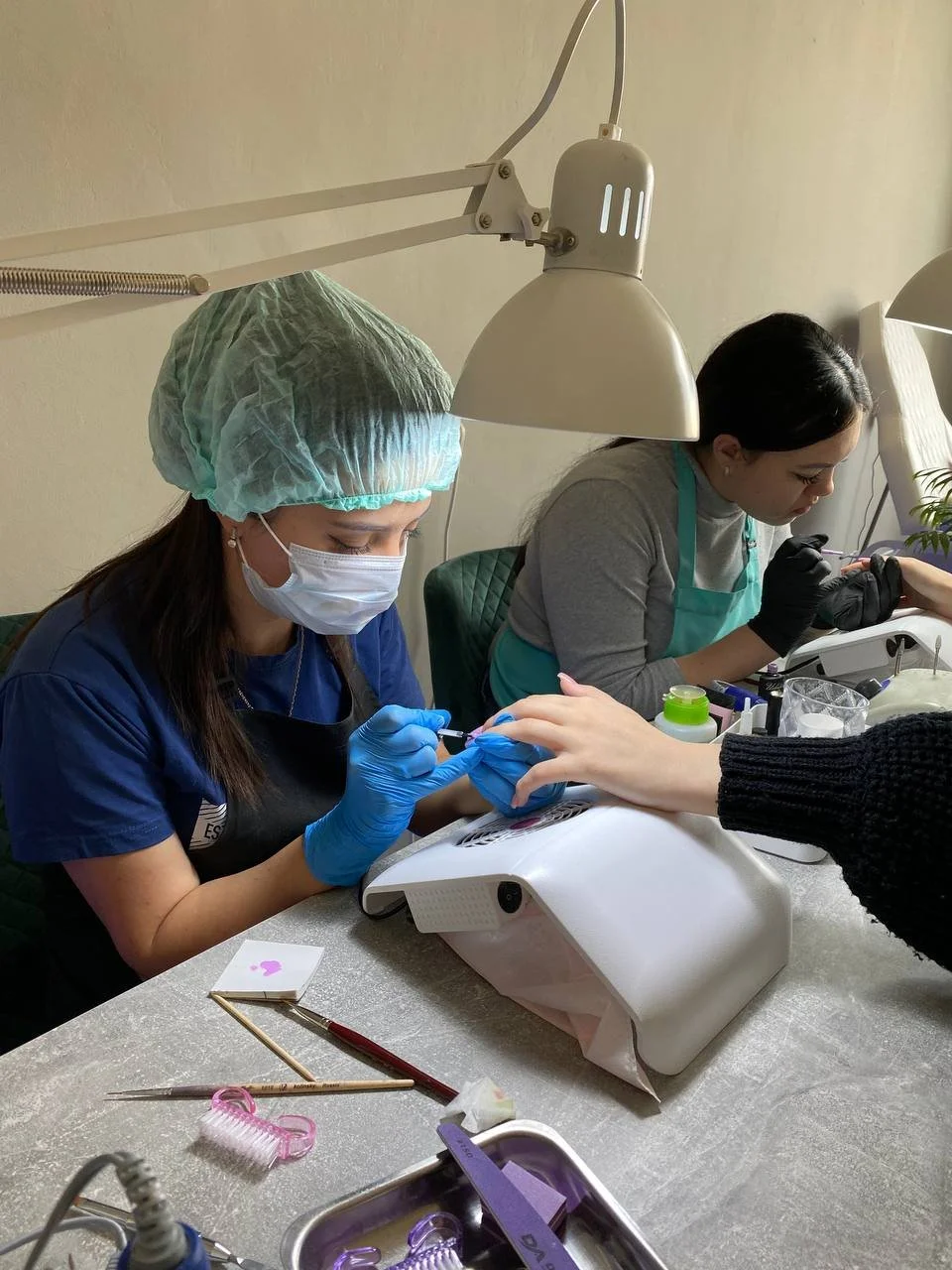
Small-group e-file practice
Why Instructor Feedback Matters in E-File Training
E-file technique is visual and physical. Small changes in angle, pressure, or direction can change the result completely.
This is where instructor feedback becomes especially valuable for beginners. A good instructor does not only demonstrate the movement. They watch the student perform it, correct the hand position, explain the mistake, and help the student understand why the correction matters.
Mars Nails School is led by Margarita Yutsaytis, an internationally recognized nail professional, Nailympia judge, and multi-time competition winner. Her teaching approach focuses on precision, professional workflow, and practical correction during hands-on practice.
For beginners, this kind of guidance helps turn isolated steps into a complete working method.
How Small-Group Practice Helps Build Control
Beginners usually need more correction, not more information.
In a large class, it is easy for small mistakes to go unnoticed. In small-group training, the instructor can watch more closely and correct technique before the student repeats the same issue across multiple nails.
Small-group practice can help students improve:
e-file pressure
hand positioning
bit control
product application
confidence on live models
timing and workflow
awareness of safety details
Mars Nails School limits beginner training to small groups so students can receive more individual attention during practice.
This is especially important for Russian manicure because the technique depends on precision, not speed.
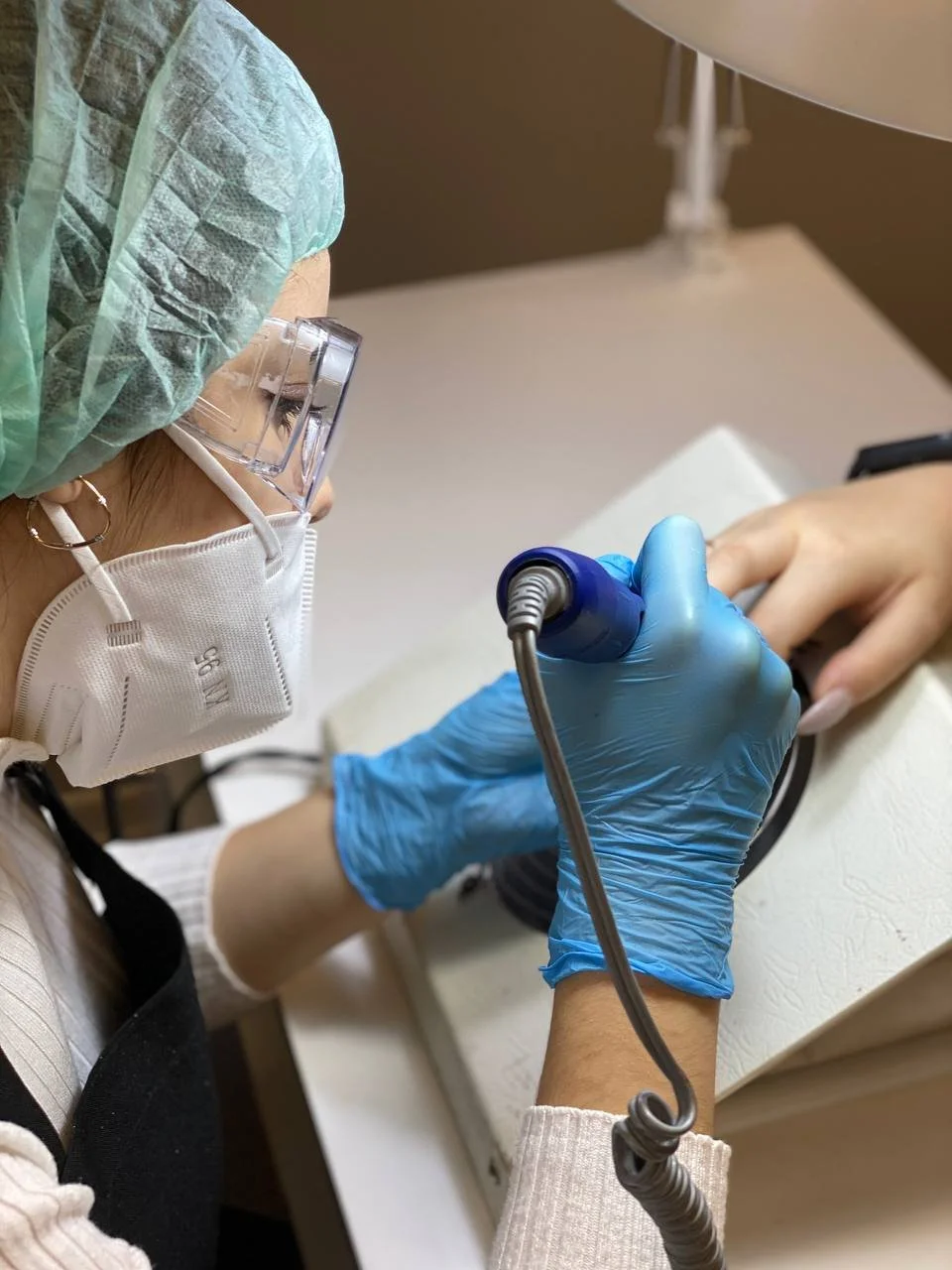
Beginner student practicing e-file control
What to Look for Before Choosing Manicure Training
Before choosing where to study Russian manicure, beginners should look beyond the name of the technique. The quality of training depends on how the skill is taught.
A strong beginner program should include:
in-person correction
real model practice
professional tools and materials
clear sanitation workflow
nail anatomy and safety education
instructor feedback during each step
a realistic explanation of what beginners can and cannot do after training
clear certificate wording
Be careful with any program that promises instant mastery, guaranteed income, or licensing without explaining the legal requirements. Russian manicure is a skill that improves with guided practice and repetition.
Next Step for Beginner Students
Beginners can learn Russian manicure, but they need the right foundation. The safest path is to start with controlled practice, instructor feedback, sanitation awareness, and a clear understanding of how the technique works.
At Mars Nails School, students learn in person in Manhattan with hands-on correction, small-group attention, and professional salon workflow.
Ready for structured hands-on instruction? View the beginner Russian manicure course.