The Economics: How the Russian Manicure Is Rewriting the Rules of NYC Nail Work
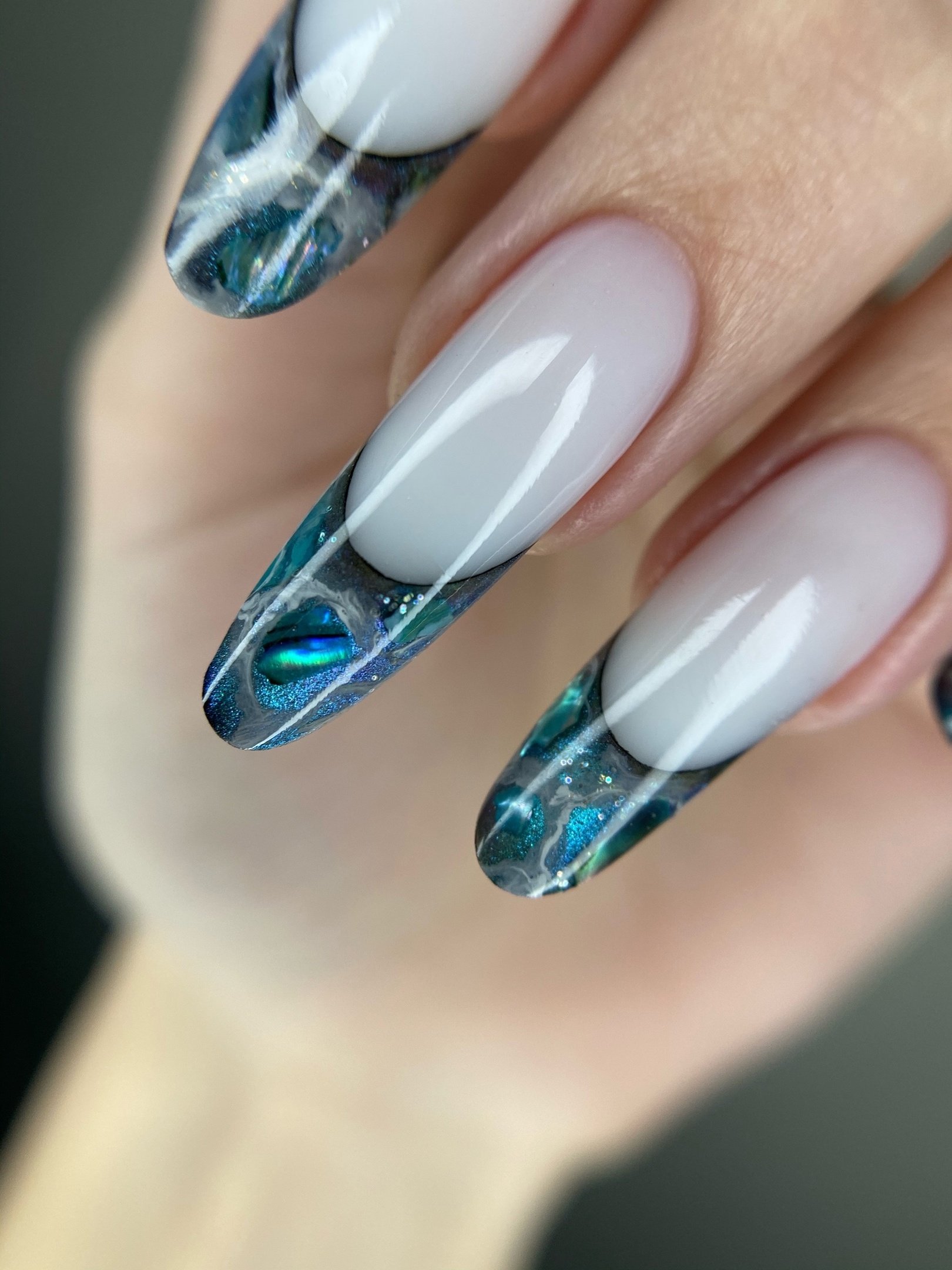
Gel Nail Extensions
If you’ve ever googled “nail technician salary NYC” the results can feel… depressing. The “average” numbers often sit around the $45K–$60K/year range - and that statistic scares off ambitious beginners and traps working techs in a mindset of “this is as good as it gets.”
But here’s the truth that most salary averages hide: New York has 2 nail economies running at the same time.
One is built on volume and low tickets. The other is built on quality, scarcity, and precision - and the “Russian manicure” (e-file / dry manicure) is the skill that lets you cross from one economy into the other.
This article breaks down both markets with real-world math, explains why the “cheap manicure model” is collapsing, and shows how training is an investment with ROI in 1–2 months for many techs - especially in Manhattan, where premium clients actively search for specialists.
Two Markets, Two Futures
1) The Volume Market: “Chop shop” economics (low ticket, high burnout)
This is the world where the average service is $40–$55, sometimes less, and the business model is simple:
Speed
Turnover
Price competition
“Next client, next client, next client…”
To gross around $400/day, a tech often needs 8-10 clients (or more) and must keep each service to 45-60 minutes.
The hidden cost? This model is powered by your body: wrists, back, eyes, lungs, nervous system. It can be years of repetitive strain, rushed mistakes, and emotional fatigue - and it’s why so many talented techs burn out right when they should be leveling up.
2) The Quality Market: Russian / E-File economy (high ticket, sustainable pace)
This is the parallel NYC reality many techs don’t even realize exists until they see it up close:
Average ticket in Manhattan premium segment: $100–$150+
Appointment time: 80-120 minutes
Clients per day: typically 4–5
Stronger tips, stronger retention, and much less price-shopping
This is not “charging more for the same thing.”
It’s a different product: precision, longevity, hygiene, and specialist-level results.
And scarcity is what creates pricing power. Not everyone can do it safely. That’s why the market pays for it.
The Old “$30 Manicure” Price Anchor Is Breaking
Historically, NYC got used to the “discount manicure.” That low price became a psychological anchor - even as:
commercial rent exploded,
product standards rose,
labor enforcement tightened,
clients became hygiene-obsessed,
and social media raised expectations for perfect results.
The cheap manicure didn’t represent “efficiency.” It often represented suppressed labor value.
Now the math is collapsing. A salon can’t pay legal wages, maintain proper sanitation, and charge bottom-of-the-barrel prices without pushing speed onto the tech.
That’s the volume trap: If you slow down to improve quality, you make less money. If you speed up to survive, you burn out.
The Numbers: A Side-by-Side Comparison (NYC Tech Economics)
Below is the simplest way to see what’s actually happening in the NYC nail market.
| Metric | Standard Tech (Volume Salons) | Russian Manicure Specialist (Quality Market) |
|---|---|---|
| Average ticket | $40-$55 | $100-$150+ |
| Service time | 30-60 min | 90-120 min |
| Clients per day | 8-10 | 3–5 |
| Daily gross | ~$400 | ~$500-$750 |
| Tips (typical 20%) | ~$60-$80 | ~$100-$150 |
| Physical strain | Extreme (conveyor pace) | Moderate (precision + ergonomics) |
| Competition | High (price wars) | Lower (skill scarcity) |
| Client loyalty | Low (price shoppers) | High (results + retention) |
This is why “average NYC nail tech salary” statistics are misleading - they merge two completely different business models into one number.
Why Russian Manicure Changes the Game
1) Precision cuticle work (without water distortion)
The technique is performed on dry skin, using controlled e-file work to remove dead tissue and clean the folds with detail. Done correctly, it creates a crisp finish that looks “fresh” longer.
2) Longevity that premium clients actually feel
Many clients don’t mind paying more if it lasts longer and looks better. In NYC, time is money - and chip-free longevity is a luxury.
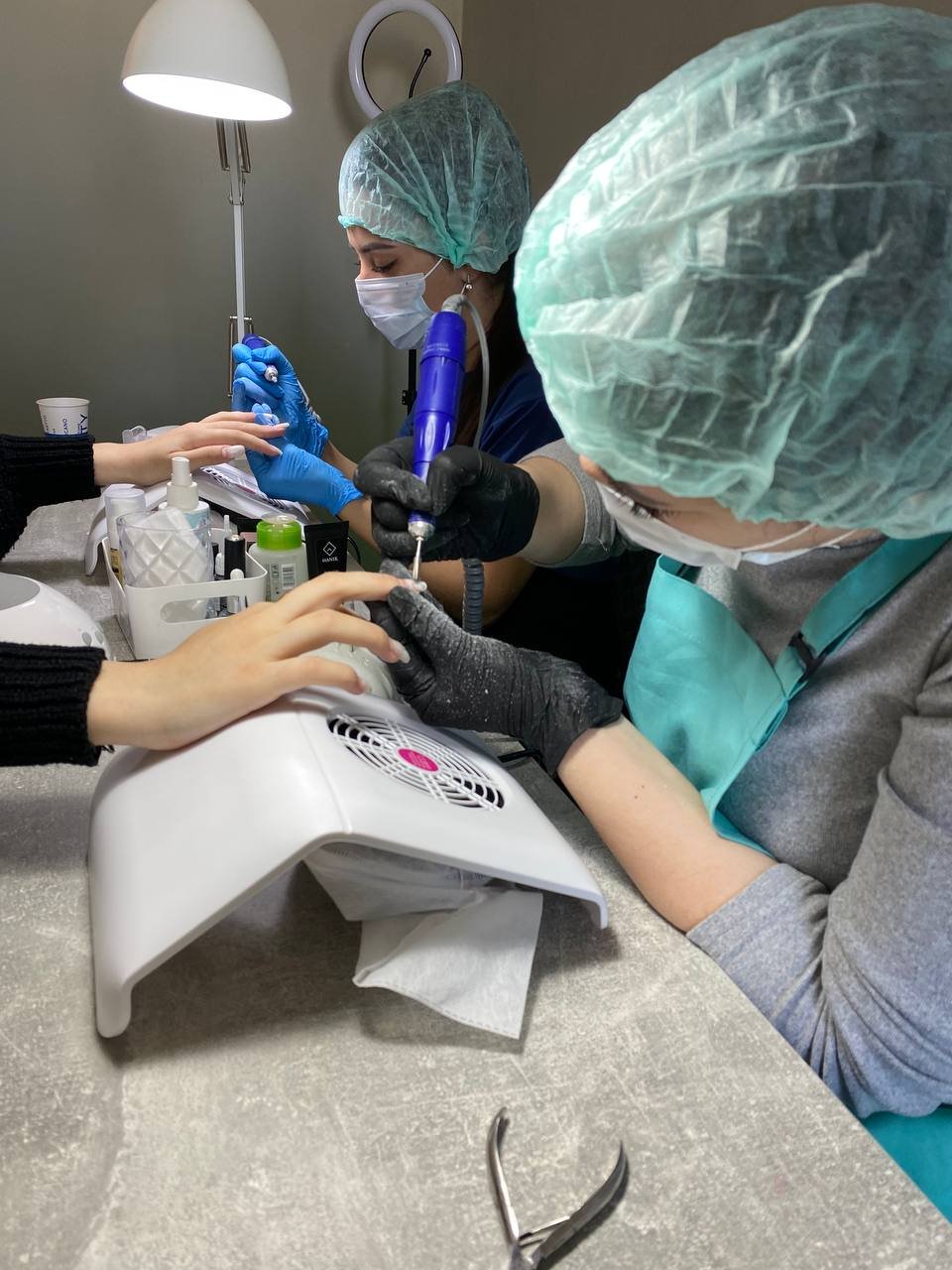
Students at work
3) “Scarcity economics”
The barrier to entry is high because safety matters. You can’t casually pick this up from random videos and expect consistent, safe results.
That scarcity is exactly why premium pricing is sustainable.
The ROI “Shock”: Why Training Can Pay Back in 1-2 Months
Let’s talk like business owners for a second. If you raise your average ticket by even $30-$40 after training (very realistic when you shift from standard manicure to premium dry/e-file work), your course pays for itself quickly.
Example: conservative ROI math
You increase your price by $40 per client.
You take 4 clients/day.
That’s $160/day extra gross.
In ~14 working days, you’ve generated $2,240.
Even if you build up gradually, 1-2 months to recover tuition is a very normal outcome for motivated techs who apply what they learn and price correctly.
How to Use This Article as a Career Decision Tool
If you’re choosing your path, ask yourself:
Do I want my income limited by speed?
Do I want to compete on price - or on skill?
Do I want to see 10 clients/day forever?
Do I want clients who price-shop, or clients who stay?
Do I want to build a career… or just survive shifts?
If your answers point toward growth, the Russian manicure economy is not a “nice idea.”
It’s the most realistic strategy NYC offers for turning nail work into a high-income, sustainable profession.
The Mars Nails School Path: From Volume Tech to Specialist
If your goal is to move into the quality economy, your education should be structured like a career ladder:
Step 1: Build the foundation (for beginners + improvers)
Start with the fundamentals that actually change your results and safety:
Basic Manicure Course - Ideal if you’re a beginner, self-taught, or an “improver” who wants clean fundamentals and confident e-file control.
Step 2: Upgrade speed, consistency, and advanced problem-solving
If you already work but want to move from “I can do it” to “I’m fast + premium + repeatable”:
Advanced Manicure Course - Designed to refine technique, improve efficiency, and handle more complex cuticles and nail conditions.
Step 3: Add a High-Margin Upgrade (Waterless / E-File Pedicure)
Once you’ve upgraded your manicure skills, the fastest way to increase your average ticket (without needing more clients) is to add a Waterless Pedicure to your menu.
That transition, from volume to precision, is where NYC nail careers stop being “low wage” and start becoming high skill, high value, and financially real.
Ready to Upgrade Your Skills?
Choose the course that matches your experience level and goals.